

Testing
Collapsible text is great for longer section titles and descriptions. It gives people access to all the info they need, while keeping your layout clean. Link your text to anything, or set your text box to expand on click. Write your text here...
Testing Collapsable Box
Chad Gadya
Chad Gadya is written in Aramaic and has been translated into most Jewish languages. It is a cumulative song that traces the fate of the young goat that was purchased by 'my father' for two coins. The Jewish Music Research Centre at The Hebrew University of Jerusalem traces the history of Chad Gadya and includes examples from various Jewish traditions. The Jewish Chronicle examines the possible metaphorical meaning of the song. Several samples are included on this page. For more examples in these and other languages, click on the buttons below.
Chad Gadya in Hebrew
Chad Gadya
in Hebrew, Transliteration, and English
One little goat
Then came the Holy One, Blessed be He
and smote the angel of death,
who slew the slaughterer,
who killed the ox, that drank the water,
that extinguished the fire, that burned the stick,
that beat the dog, that bit the cat, that ate the goat,
Which my father bought for two zuzim.
One little goat, one little goat
Chad gadya
V’ata Hakodesh Baruch Hu
v’shachat l’malach hamavet,
d’shachat l’shocheit,
d’shachat l’tora, d’shata l’maya,
d’chava l’nura, d’saraf l’chutra,
d’hikah l’chalba, d’nashach l’shunrah,
d’achlah l’gadya,
d’zabin aba bitrei zuzei,
chad gadya, chad gadya.
חַד גַדְיָא
וְאָתָא הַקָּדוֹשׁ בָּרוּךְ הוּא
וְשָׁחַט לְמַלְאַךְ הַמָּוֶת, דְּשָׁחַט לְשׁוֹחֵט
דְּשָׁחַט לְתוֹרָא, דְּשָׁתָה לְמַיָּא
דְּכָבָה לְנוּרָא, דְּשָׂרַף לְחוּטְרָא
דְּהִכָּה לְכַלְבָּא, דְּנָשַׁךְ לְשׁוּנְרָא, דְּאָכְלָה לְגַּדְיָא
דְּזַבִּין אַבָּא בִּתְרֵי זוּזֵי
חַד גַּדְיָא, חַד גַּדְיָא
Judeo-Greek
Yiddish
Ladino/Judeo-Spanish
Judeo-Italian (-Provencal, -Piedmontese)
About This Track
Setting:
Commitment:
Good for:
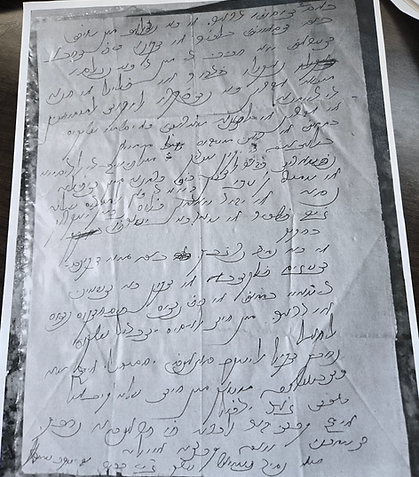
Many Jews today have maintained family letters from the 19th and 20th centuries written in Judeo-Arabic, Yiddish, Ladino, Judeo-Persian, or another Jewish language. Because of their archaic Hebrew-letter writing systems - and often messy handwriting - these letters may be difficult to decipher, even for those fluent in the language. Heirloom's Family Letters track can help! We are collecting such letters, along with their transliteration and translation, to train artificial intelligence / machine learning models to automatically transliterate and translate them. In addition, we are creating online communities of individuals who are interested in sharing and engaging surrounding their family letters. If you are interested in participating as a family letter holder, translator, programmer, or in some other way, please contact us.
Example: Judeo-Moroccan Arabic
Letter in Moroccan Judeo-Arabic, from Yaakov Amram, Ouazzane 1964. Letter preserved by Rafy Amram. Transcription and translation by Jonas Sibony.

Part 1
Part 2